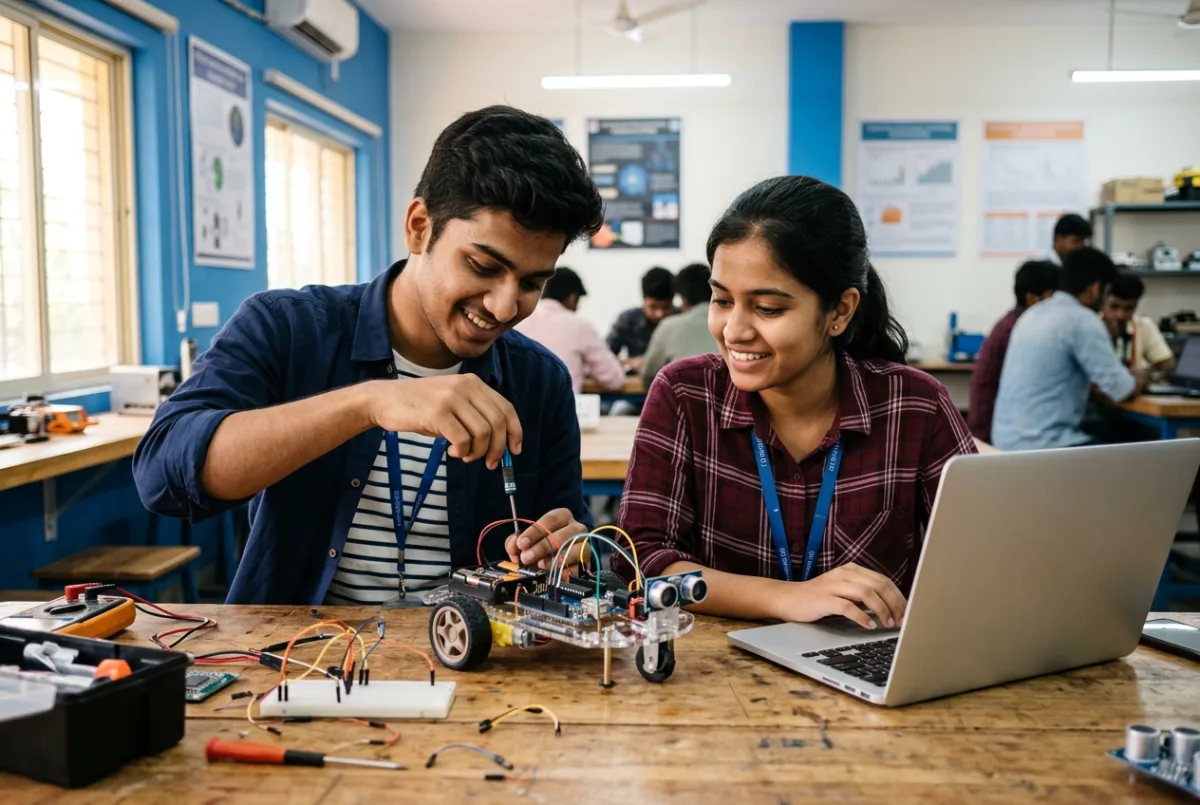
Robotics is one of the most effective ways to make technical learning real. Instead of memorising formulas, students wire circuits, write code and watch a machine respond. When it fails, they diagnose and try again — the exact habit engineering demands.
What students learn
- Basic electronics: voltage, current, components and safe wiring
- Arduino programming: inputs, outputs, conditions and loops
- Sensors: measuring distance, light, temperature and motion
- Motors and movement: driving wheels, servos and mechanisms
- Design thinking: planning, testing and improving a prototype
Why it helps academically
Robotics connects physics, maths and computer science in one project. Students see why concepts matter and become more comfortable with problem-solving. Presentation and teamwork also improve because projects must be demonstrated and explained.
Competitions and portfolios
School and college robotics competitions give students a goal and a deadline. A working project, even a simple obstacle-avoiding robot, becomes evidence of practical ability for higher studies and internships.
Getting started
You do not need expensive equipment to begin. A structured course with an Arduino kit, guided circuits and small group projects is enough. Focus on understanding each component and testing one change at a time.
Robotics is not only for future engineers. It builds patience, logic and confidence — skills that help in any career.